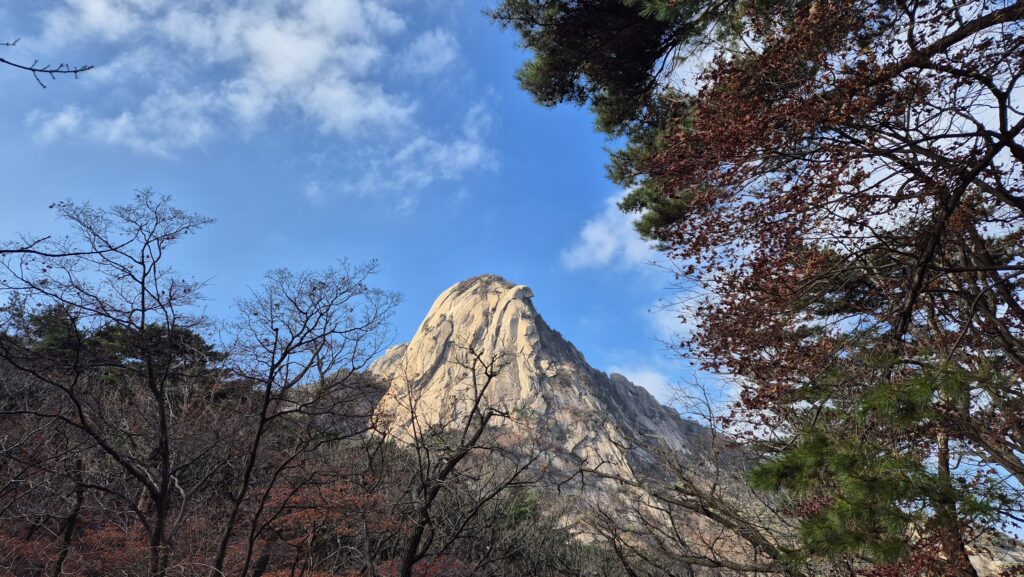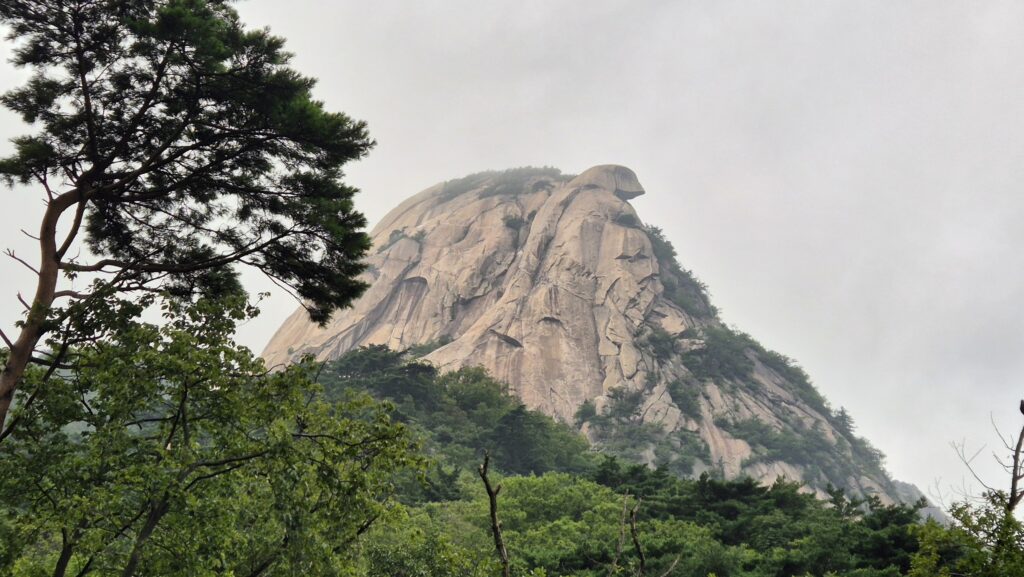
Insubong is a massive granite monolith with over 80 established routes spanning all four faces (East, West, South, North). While many routes are well-equipped with bolts and anchor rings, Insubong is fundamentally a Trad Climbing area.
This means you must be comfortable using cams and have a solid understanding of multi-pitch systems. (If you are new to multi-pitch climbing, please make sure to learn the systems before arriving.)
1. Know Before You Go: Grades & Gear
Every pitch has a different grade and requires specific gear. It is crucial to study the Topo (Route Map) in advance to gauge the difficulty, which can often be compared to the Yosemite Decimal System (YDS).
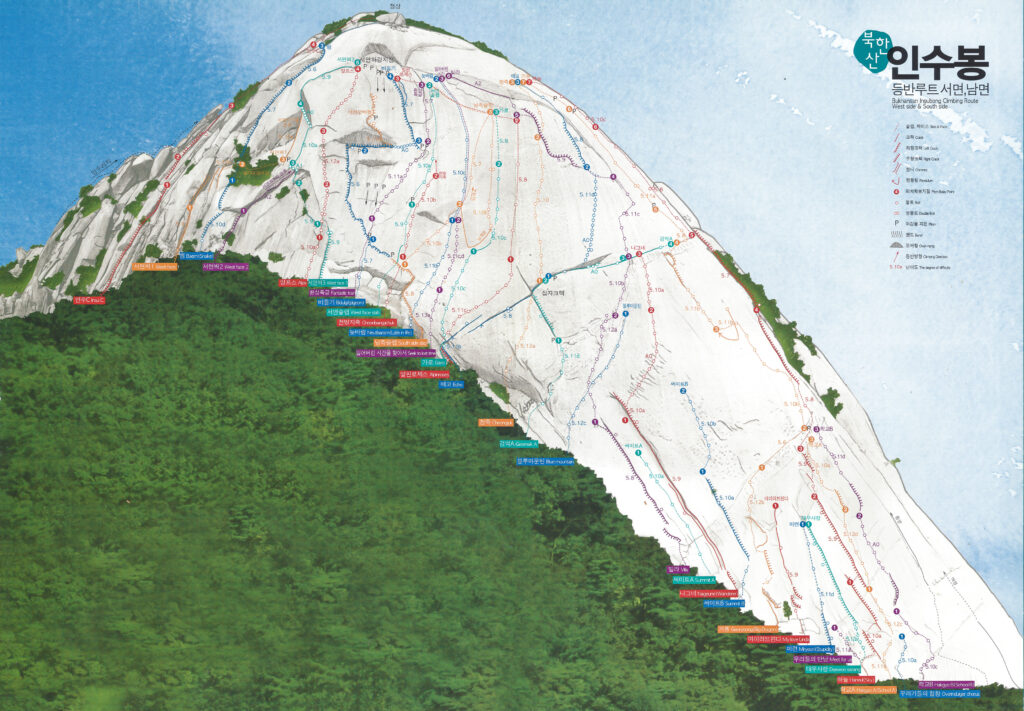
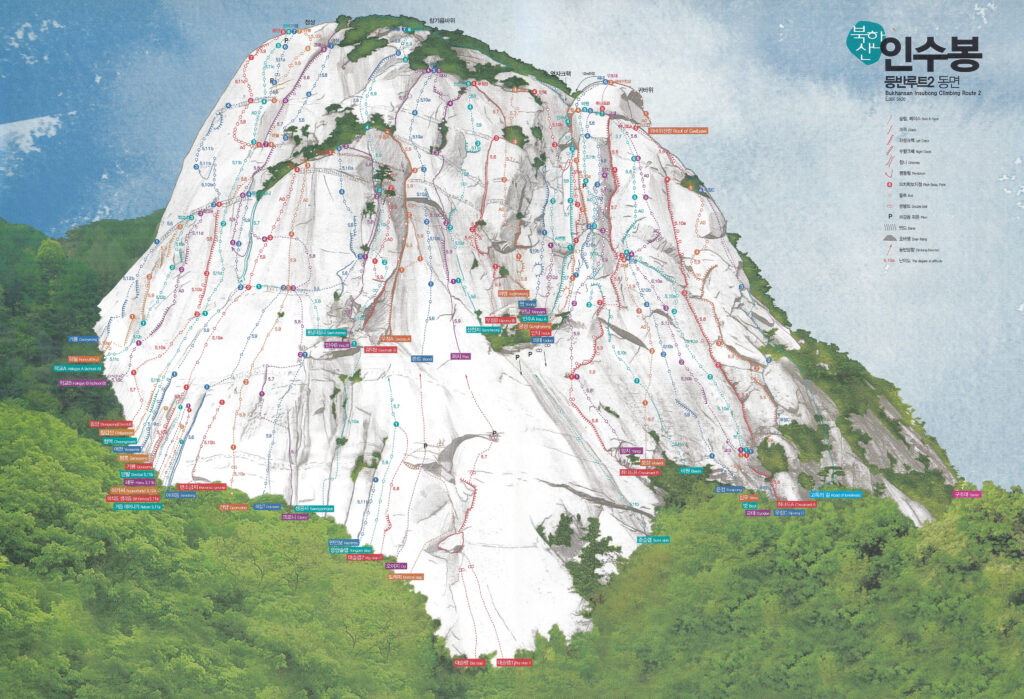
- 💡 Pro Tip for Research: Most local information is in Korean. To find route maps, search Google for “인수봉 (Route Name) 개념도”. “개념도 (Gae-nyeom-do)” means Topo or Route Map.
2. Selecting Your Route
Multi-pitch climbing is an endurance game. It requires significant physical and mental energy to move as a team through multiple pitches.
If you are leading, do not choose a route based solely on your sport climbing grade. You must consider the overall ability of your entire team. Select a route that allows for a safe and enjoyable experience for everyone.
🔰 Recommended Routes for Entry-Level Multi-Pitch
Here are some classic routes recommended for climbers who are new to Insubong or have limited multi-pitch experience. These are great for “following” to get a feel for the rock.
- Insu C (인수C)
- Pigeon Road (Bidulgi-gil / 비둘기길)
- Geobong-gil (거봉길)
- Amidong-gil (아미동길)
- Insu B (Variation)
- Insu A (Variation) / Uidae-gil (Medical School Route / 의대길)
- Chouinard B (취나드B)
- Path of Solitude (Godok-gil / 고독의 길)
(Note: These recommendations are based on personal experience. Always double-check current conditions.)
3. Reaching the True Summit
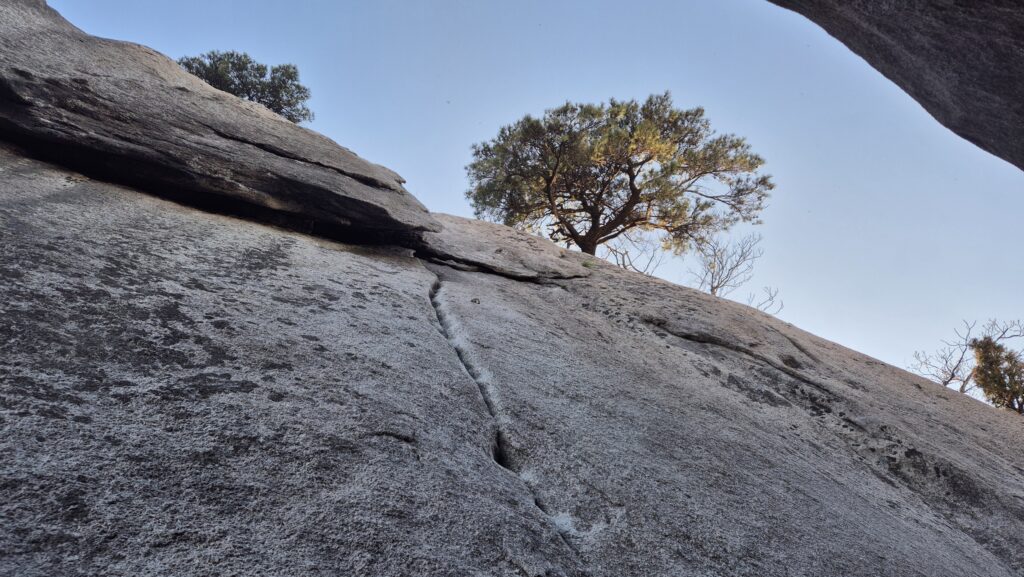
Finishing your route doesn’t always mean you’re standing on the very top. Many routes end at shoulders or ledges like Ear Rock (Gwibawi), Youngja Crack, or Sesame Oil Rock (Chamgireum).
To reach the true summit from these points, you may need to do a bit of extra climbing or ridge scrambling (Ridge-climbing).
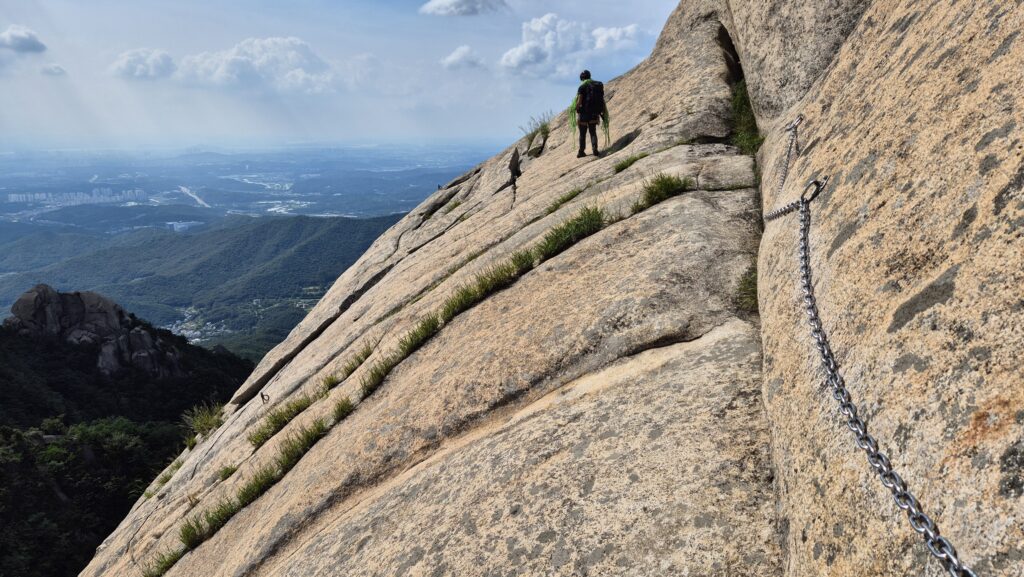
- From the Summit: You can easily rappel down via the West Face (Seo-myeon) rappel point.
- Retreating: If you choose not to go to the summit, you can rappel back down the route you climbed. Caution: Always check for other parties climbing up below you to avoid accidents or rope tangles.
4. The Reward: “Climber’s Privilege”
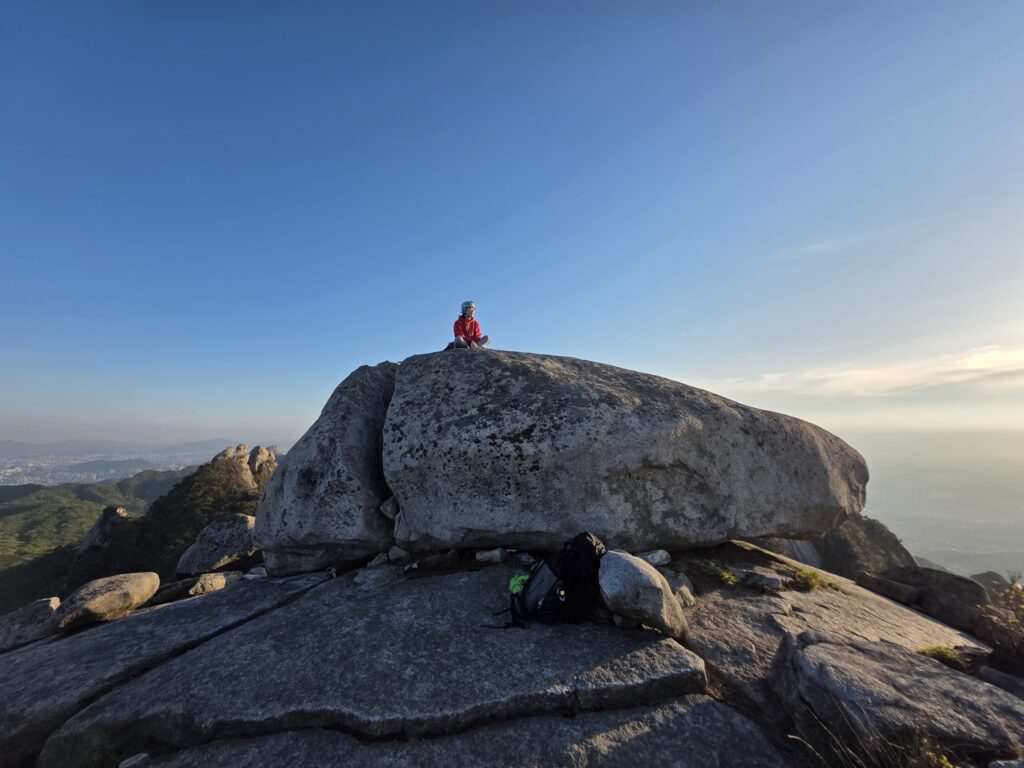
The summit features a massive boulder sitting like a dolmen, serving as a resting spot for climbers.
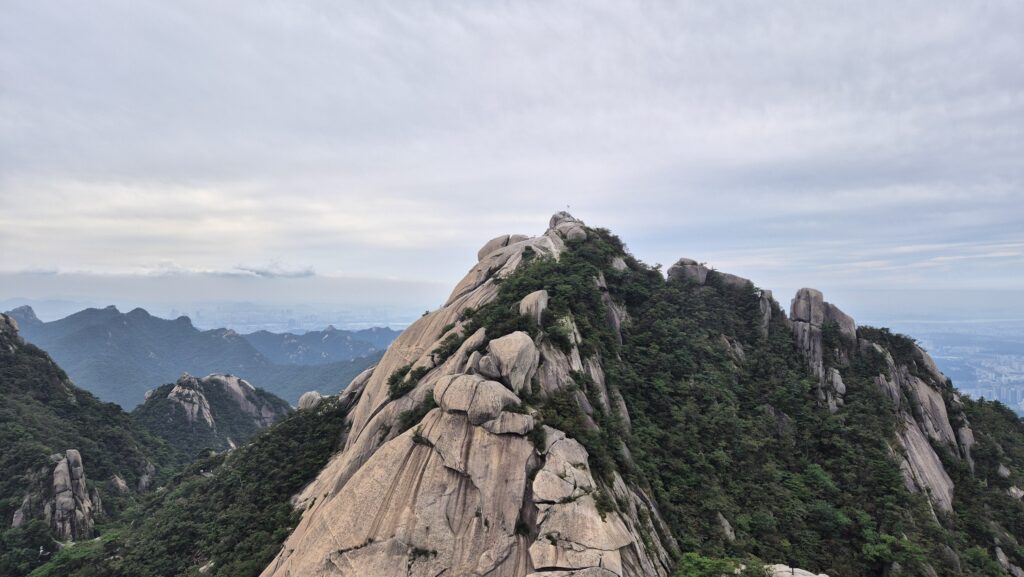
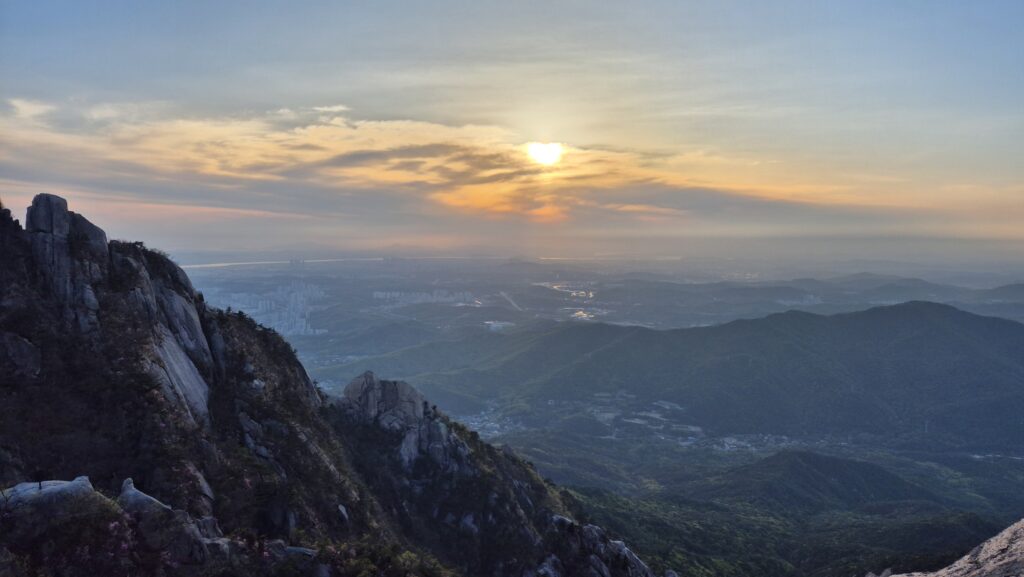
- West View: A stunning look at the “Hidden Wall” (Sumneun-byeok).
- Front View: You are face-to-face with Baekundae Peak, the highest point of Bukhansan.
Taking a photo with Baekundae in the background is a rite of passage for Insubong climbers. It’s a view and a privilege reserved only for those who climb up.
Be safe and enjoy the vertical Seoul!